

Article: Vitamin C Serum Benefits: What It Does for Your Skin

Vitamin C Serum Benefits: What It Does for Your Skin
Vitamin C serum benefits include a brighter-looking complexion, more even-looking tone, and improvements in the appearance of fine lines. Vitamin C is also an antioxidant. How well a serum works depends on its complete formula, stability, and how consistently you can use it comfortably.
If you are deciding whether to add one to your routine, start with the result you want to see. This guide explains what vitamin C serum can offer, what it cannot promise, and where VU C & E Serum Ferulic Acid fits.
The main vitamin C serum benefits
1. A brighter-looking complexion
Vitamin C is often chosen when skin looks dull or lacks radiance. The American Academy of Dermatology includes vitamin C among ingredients to consider for visible signs of aging and dark spots. The goal is a more radiant appearance, rather than a change to your natural skin color.
2. More even-looking skin tone
Topical vitamin C has been studied for its effects on pigmentation. Some formulas may help make uneven tone and dark marks less noticeable over time. However, not every dark spot has the same cause, and an ingredient study does not establish the results of every serum.
For a spot that is new, changing, itching, or bleeding, arrange a professional assessment. Our age-spots guide explains why identifying a spot comes before choosing care.
3. Improvements in the appearance of fine lines
Some clinical studies have found improvements in the appearance of wrinkles and skin texture with topical vitamin C formulations. Harvard Health discusses these findings, including research involving at least three months of use. That supports a patient approach; it does not establish a guaranteed timeline or result for a particular product.
4. Antioxidant benefits alongside sun protection
Vitamin C is an antioxidant, meaning it can help counter free radicals associated with environmental exposure. Research has also examined vitamin C combined with other antioxidants. A review of topical vitamin C research describes both its potential and the challenges of creating stable, effective formulas.
A vitamin C serum is not sunscreen and does not have an SPF unless specifically labeled as a sunscreen product. Use sun protection as directed, including shade and protective clothing.

What to look for in a vitamin C serum
Choose the finished product, rather than an ingredient name alone. Vitamin C products differ in the form of vitamin C, concentration, packaging, other ingredients, and directions. A higher percentage is not automatically a better match for your skin.
- Clear cosmetic goals: Look for benefits that match your priorities, such as radiance or more even-looking tone.
- Readable directions: Check how and when the manufacturer recommends using the product.
- Suitable storage: Vitamin C can be sensitive to light, heat, and air. Follow the storage and expiration information and close the container after use.
- Comfortable use: Consider the complete ingredient list and your experience with other skincare products.
Cleveland Clinic explains vitamin C serum selection, storage considerations, and possible irritation. If a product changes noticeably in color, smell, or texture, ask its manufacturer whether it should still be used.
Meet VU C & E Serum Ferulic Acid
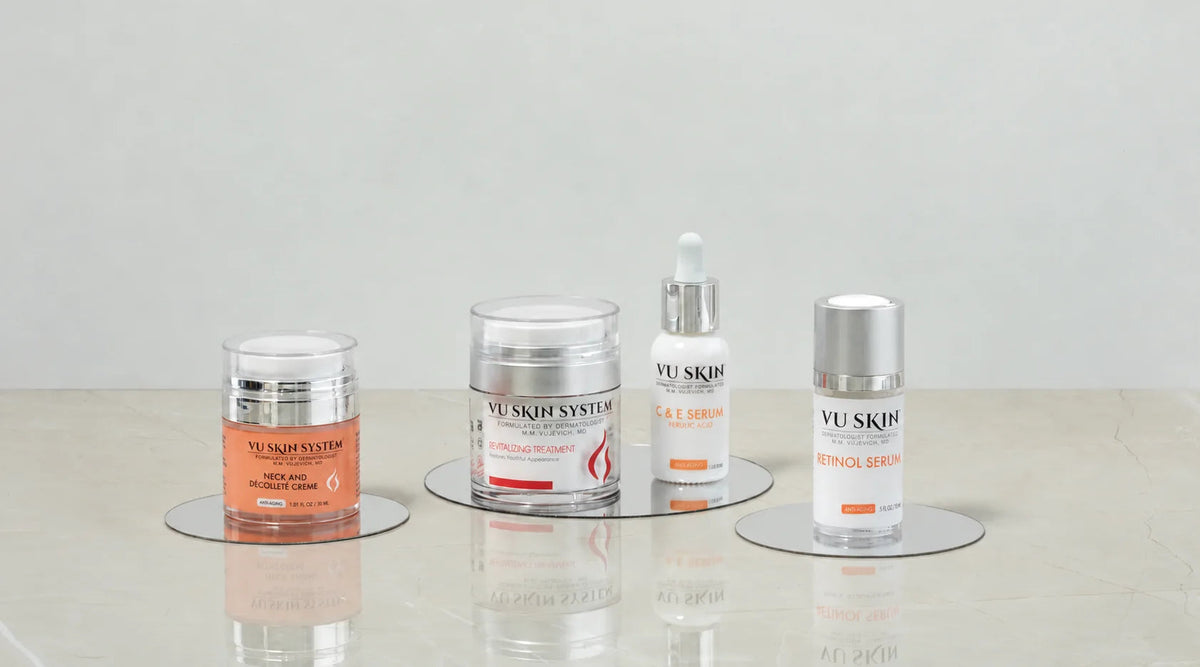
VU C & E Serum Ferulic Acid is described by VU as helping brighten dull-looking skin and improve the appearance of uneven tone and fine lines. It comes in a 30 mL / 1 fl. oz. size.
Those appearance-focused goals make it an option to consider if you want a targeted serum in your routine. Review the current product information and package directions before use. Research on vitamin C ingredients or other brands should not be treated as a clinical trial of this VU formula.
Explore VU C & E Serum Ferulic Acid
How to fit vitamin C serum into your routine
Follow your serum’s directions for timing and amount. Vitamin C serums are commonly used after cleansing and before moisturizer. Morning use can be convenient, followed by sunscreen.
- Cleanse: Use a cleanser that suits your skin. Compare VU options in our cleanser guide, or explore Deep Pore Cleanser.
- Apply serum: Use it according to its label, introducing one new product at a time.
- Moisturize and use sun protection: If considering Essential Daily Moisturizer SPF 30, follow its full sunscreen label, including application and reapplication directions.
For the complete order, read how to layer skincare products. If retinol is already part of your routine, our retinol beginner guide covers using vitamin C and retinol within the same routine.
Frequently asked questions
How long does vitamin C serum take to work?
Expect gradual changes rather than overnight results. Cleveland Clinic advises that noticeable effects can take around three months. Individual results depend on the product, the concern, and consistent use; that estimate is not a promise for every serum.
Can you use vitamin C serum every day?
Some vitamin C serums are intended for daily use. Follow your product’s directions and adjust based on tolerance. Stop using a product that causes significant irritation, and seek advice for persistent symptoms.
Is vitamin C serum suitable for sensitive skin?
Suitability depends on the formula and the person. Vitamin C serums can cause redness, itching, or dryness. Try a new product on a small area first, and ask a dermatologist for guidance if your skin is persistently reactive.
Does vitamin C serum replace moisturizer or sunscreen?
No. A serum serves a different purpose. Moisturizer addresses moisture and comfort, while sunscreen provides labeled sun protection. Read our daily sunscreen and moisturizer guide for help with those steps.
Choose a serum for the results you want to see
A vitamin C serum can be a useful addition when brighter-looking skin, more even-looking tone, or less noticeable fine lines are your goals. Choose a formula you can use comfortably, follow its directions, and keep your routine manageable.
Discover VU C & E Serum Ferulic Acid
Sources
- American Academy of Dermatology: Dermatologist-recommended skin care for your 20s
- Cleveland Clinic: What Can Vitamin C Do for Your Skin?
- Harvard Health Publishing: Why is topical vitamin C important for skin health?
- Al-Niaimi F, Chiang NYZ. Topical Vitamin C and the Skin: Mechanisms of Action and Clinical Applications. Journal of Clinical and Aesthetic Dermatology. 2017;10(7):14–17.
This article provides general skincare education. For advice about a skin condition or a new or changing spot, consult a qualified healthcare professional.
Written by Deirdre Gardner

Leave a comment
This site is protected by hCaptcha and the hCaptcha Privacy Policy and Terms of Service apply.