

Retinol is one of the most researched ingredients in skincare, but figuring out how to use it can be confusing. How often should you apply it? Does it go before or after moisturizer? And how do you know whether your skin is adjusting or becoming irritated?
Starting retinol doesn't require a complicated routine. The key is introducing it gradually, paying attention to how your skin responds, and maintaining consistent hydration and sun protection.
Retinol can still cause irritation, even with careful use. This beginner's guide explains how to reduce the risk and build a routine that supports smoother, healthier-looking skin.
Quick Answer: How Should Beginners Use Retinol?
Start retinol at night, approximately twice per week on nonconsecutive nights, and increase frequency gradually only as your skin tolerates it. Follow your product's directions and your dermatologist's advice.
- Cleanse with a gentle facial cleanser.
- Allow your skin to dry.
- Apply retinol according to its directions.
- Follow with moisturizer.
- Use broad-spectrum SPF 30 or higher every morning.
If your skin becomes irritated, reduce frequency or pause. Discontinue use if significant irritation develops. Using retinol every night is not the goal if your skin cannot tolerate it.
What Is Retinol and What Does It Do for Your Skin?
Retinol is a vitamin A derivative in the family of ingredients called retinoids. It is used in skincare to help improve the appearance of fine lines, uneven texture, dullness, and certain dark spots.
With appropriate, consistent use, retinol may help skin look smoother, more radiant, and more even in tone. Results vary with the formula, frequency, individual skin characteristics, and other parts of your routine. It is not an overnight treatment.
For more on the benefits, read Retinol Benefits for Smoother, More Radiant-Looking Skin. This guide focuses on the practical steps for getting started.
How Often Should You Use Retinol?
One common beginner mistake is assuming retinol must be applied every night to work. Starting too frequently can increase dryness, flaking, redness, and irritation. A gradual introduction gives you time to evaluate your skin's response.
A Beginner Retinol Schedule
This is an example, not a requirement. Always prioritize your product's directions and individual tolerance.
- Weeks 1–2: Try two nonconsecutive nights per week. Watch for dryness, redness, flaking, or increased sensitivity.
- After the introductory period: Increase slowly only if your skin stays comfortable between applications. There is no deadline for reaching every-other-night or nightly use.
- If irritation appears: Pause or return to a lower frequency. Stop if irritation becomes significant or persistent and seek professional advice.
Not everyone needs nightly application. A routine you can comfortably maintain is more useful than repeatedly pushing through irritation.
How to Apply Retinol Step by Step
Step 1: Cleanse Your Skin Gently
Remove makeup, sunscreen, and daily buildup with a cleanser appropriate for your skin. Avoid aggressive scrubbing and unnecessary exfoliation on retinol nights. Explore VU's facial cleanser collection for options.
Step 2: Allow Your Skin to Dry
Gently pat your face dry after cleansing. Beginners may find application to dry skin more comfortable, since applying retinol to damp skin can increase irritation for some people.
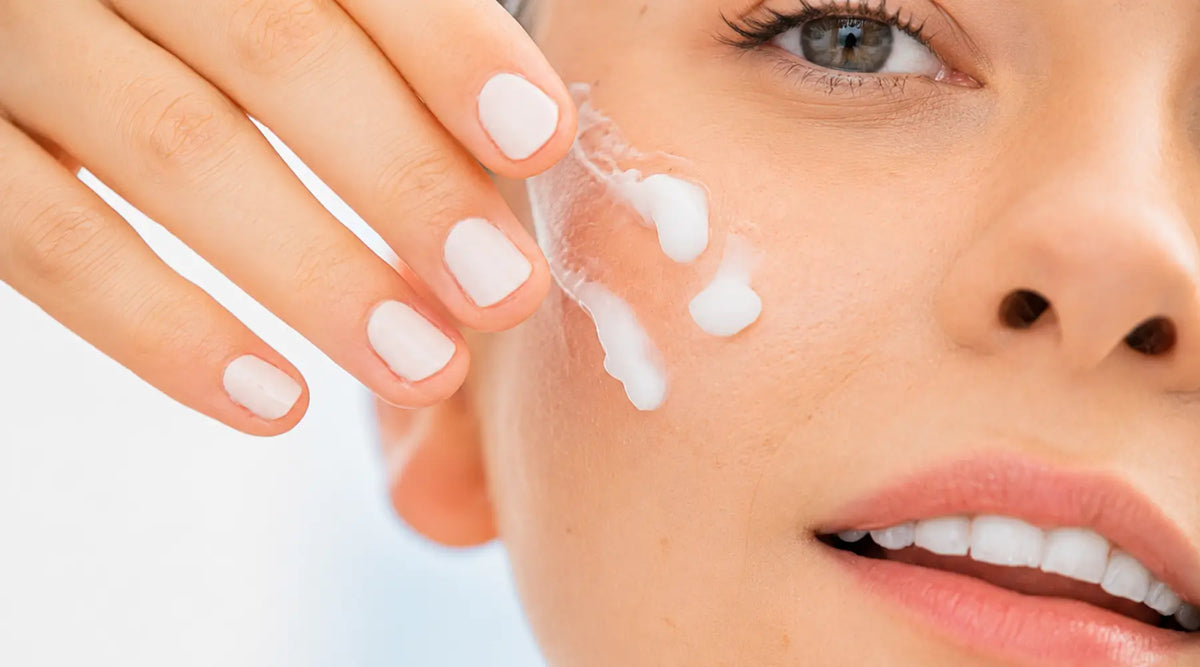
Step 3: Apply Your Retinol Serum
Use the recommended amount for your product. More serum does not mean faster results.
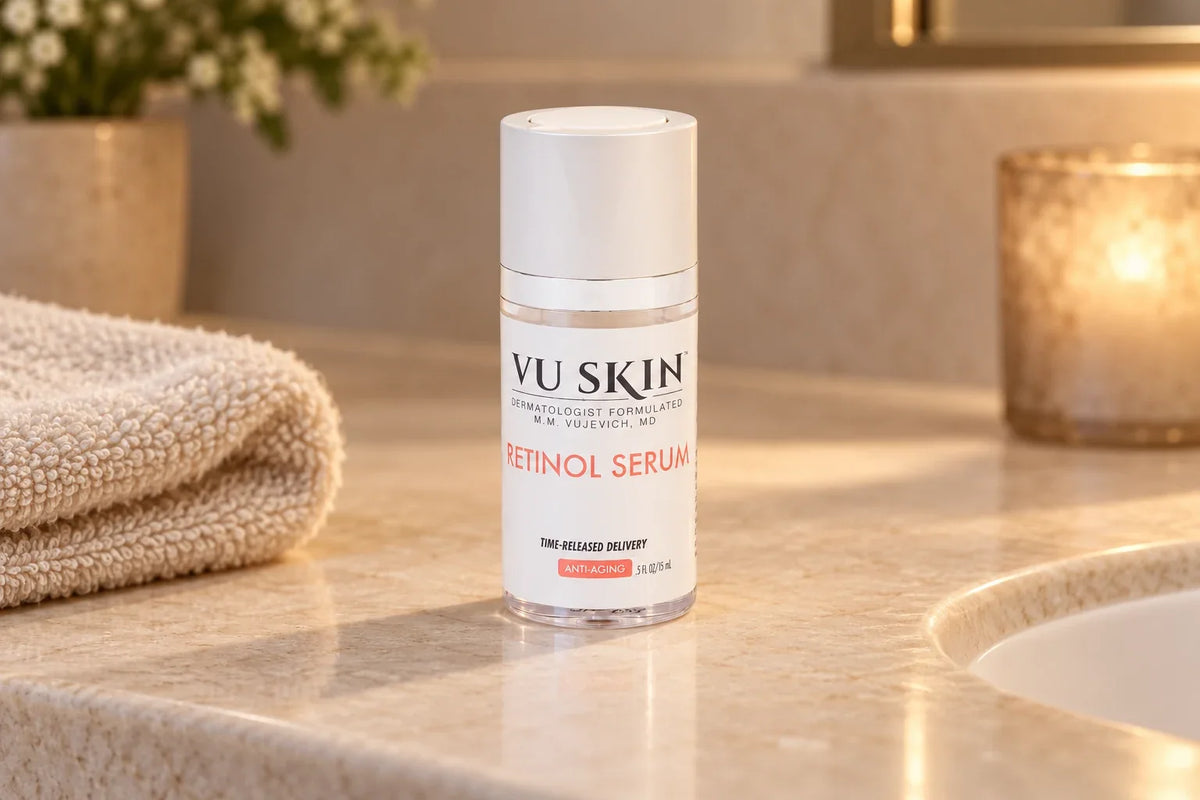
For VU Retinol Serum, the current directions specify evening use: hold the pump and twist the cap to the right until it pops open, then apply 1–2 pumps evenly over the face and neck after cleansing. Introduce gradually based on skin tolerance and avoid direct contact with the eyes.
Do not use during pregnancy. Consult your healthcare professional before use while breastfeeding or if you are under dermatological care.
Step 4: Follow With Moisturizer
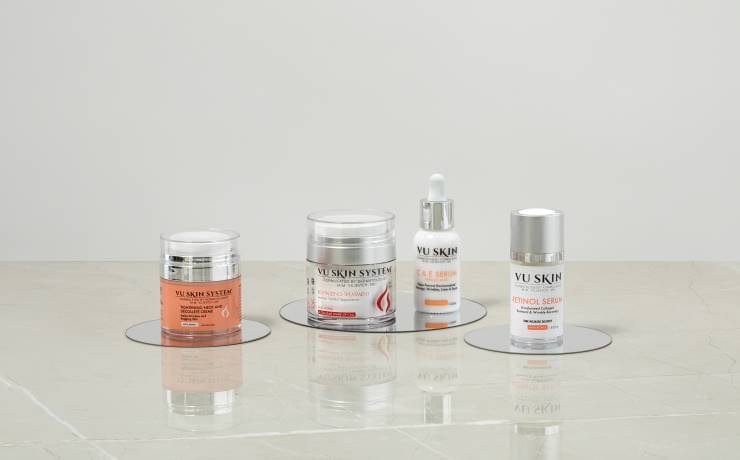
Retinol can contribute to dryness, especially during the introductory period. Moisturizer helps reduce moisture loss and supports a more comfortable routine. VU's retinol directions recommend following with Dermal Hydrating Balm for hydration.
Step 5: Protect Your Skin the Following Morning
Use broad-spectrum sunscreen with SPF 30 or higher every morning. Apply as directed and reapply at least every two hours outdoors and after swimming or sweating; choose a water-resistant sunscreen when needed. Shade and protective clothing also matter.
VU Essential Daily Moisturizer SPF 30 combines moisturizing with broad-spectrum sun protection. Follow the product label and use enough sunscreen for the exposed areas.
Should You Apply Retinol Before or After Moisturizer?
For VU Retinol Serum, the directions place retinol after cleansing and before moisturizer. Other products may have different instructions, so follow the formula you are using.
What Is the Retinol Sandwich Method?
The sandwich method means applying a light layer of moisturizer, retinol, and another thin layer of moisturizer. Some people use this approach to improve comfort when introducing retinoids.
It is not a substitute for reducing frequency if your skin is irritated. Because product formulations differ, ask your dermatologist whether buffering is appropriate and prioritize your product's instructions.
For a broader explanation, read our guide to layering skincare products in the correct order.
Can You Use Retinol and Vitamin C Together?
Retinol and vitamin C can both have a place in a routine when your skin tolerates the formulas. Beginners may find it simpler to use a separate vitamin C serum in the morning and retinol at night.
Morning: Vitamin C and Sun Protection
Vitamin C is an antioxidant commonly used to support a brighter, more even-looking complexion. If you use VU C & E Serum, follow its directions and finish your morning routine with sunscreen. Vitamin C does not replace sun protection.
Evening: Retinol and Moisturizer
Keep evening application simple: cleanse, allow skin to dry, apply retinol on scheduled nights, and moisturize. Introduce one new active product at a time so it is easier to identify irritation.
There is no universal rule that vitamin C and retinol must always be separated. VU Retinol Serum itself lists vitamin C ingredients. Separating an additional vitamin C serum is an optional way to simplify your routine, not a requirement for every formula.
What Is a Retinol Purge?
Some people notice more blemishes after introducing a retinoid. This is sometimes called a “purge,” but not every breakout after starting a new product is temporary adjustment.
Retinol Purging vs. Skin Irritation
Persistent burning or stinging, pronounced redness, excessive peeling, significant dryness, itching, or swelling can indicate irritation. New blemishes can also relate to other products, hormones, or underlying acne.
Do not use the term “purging” to dismiss worsening symptoms. Stop using the product if significant irritation develops and seek guidance from a qualified healthcare professional. A dermatologist can help distinguish acne from irritation or another skin condition.
Common Retinol Mistakes to Avoid
- Starting nightly: Introduce a new formula gradually, even if you have used other active ingredients before.
- Applying too much: Follow the recommended amount rather than adding extra pumps.
- Combining too many strong actives: Avoid adding several exfoliating acids or irritating treatments at once. Ask your clinician how to combine prescribed treatments.
- Skipping moisturizer: Revisit hydration if your skin feels tight or dry.
- Forgetting sunscreen: Keep sun protection part of your daily routine.
- Expecting immediate results: Allow time for gradual changes without continuing a product that causes significant discomfort.
How Long Does Retinol Take to Work?
Results depend on the concern, formula, strength, and frequency of use. Changes may develop over several weeks, while visible improvements in fine lines or uneven pigmentation can take several months. No particular timeline is guaranteed.
For beginners, the first goal is finding a routine the skin tolerates. Repeatedly changing products or applying more than directed makes it harder to assess how a formula works for you.
Building a Beginner Retinol Routine With VU Skin System
Morning Routine
- Cleanse: Use a gentle cleanser as needed.
- Target, optionally: Apply VU C & E Serum according to its directions if it is already tolerated.
- Protect: Finish with Essential Daily Moisturizer SPF 30 or another suitable broad-spectrum sunscreen.
Evening Routine
- Cleanse: Remove makeup, sunscreen, and daily buildup.
- Treat: Apply VU Retinol Serum on scheduled retinol nights according to its directions.
- Moisturize: Follow with Dermal Hydrating Balm or a suitable moisturizer.
VU describes its retinol serum as a seven-hour time-release formula. It also lists moisturizing and skin-conditioning ingredients including sodium hyaluronate. These formulation features do not guarantee that irritation will not occur; individual tolerance still varies.
On non-retinol nights, focus on cleansing and moisturizing. If your skin is already unusually dry, sensitive, or uncomfortable, read our guide to supporting your skin barrier before introducing another active ingredient.
Frequently Asked Questions About Retinol
Can beginners use retinol every night?
Start gradually rather than assuming daily use is necessary. Approximately two nonconsecutive applications per week is one introductory approach, adjusted to the product's directions and your skin's response.
Should I apply retinol to wet or dry skin?
Apply to clean, dry skin when starting out. Damp-skin application may increase irritation for some people.
Can I use retinol around my eyes?
VU directs users to avoid direct eye contact. The eye area is sensitive; follow product-specific directions and ask your dermatologist about an appropriate eye-area treatment.
What should I do if retinol makes my skin peel?
Mild dryness or flaking can occur. Reduce frequency or pause and keep the rest of your routine gentle. Discontinue use and seek professional advice for significant or persistent irritation.
Can I use retinol while pregnant or breastfeeding?
Do not use VU Retinol Serum during pregnancy. Consult your healthcare professional before using it while breastfeeding or if you are under dermatological care.
Does retinol help with dark spots?
It may improve the appearance of certain types of uneven pigmentation over time. Results depend on the cause, formula, and consistent sun protection. Have new or changing spots evaluated by a clinician.
Can sensitive skin use retinol?
Some people can tolerate it with careful introduction; others may need to avoid it. A dermatologist can help determine whether it is suitable, especially if you have rosacea, eczema, or an active skin condition.
Start Your Retinol Routine With Confidence
Start gradually, moisturize regularly, use daily sun protection, and give your routine time. Explore VU Retinol Serum to see the current formula, directions, and precautions before adding it to your evening routine.
Sources and Further Reading
- American Academy of Dermatology: Retinoid or retinol?
- Cleveland Clinic: Retinol benefits, uses, and precautions
- VU Skin System: Current Retinol Serum directions and precautions
This article is for general skincare education and does not replace personalized medical advice. Consult a qualified healthcare professional about persistent symptoms or the suitability of retinol for your skin.

Leave a comment
This site is protected by hCaptcha and the hCaptcha Privacy Policy and Terms of Service apply.